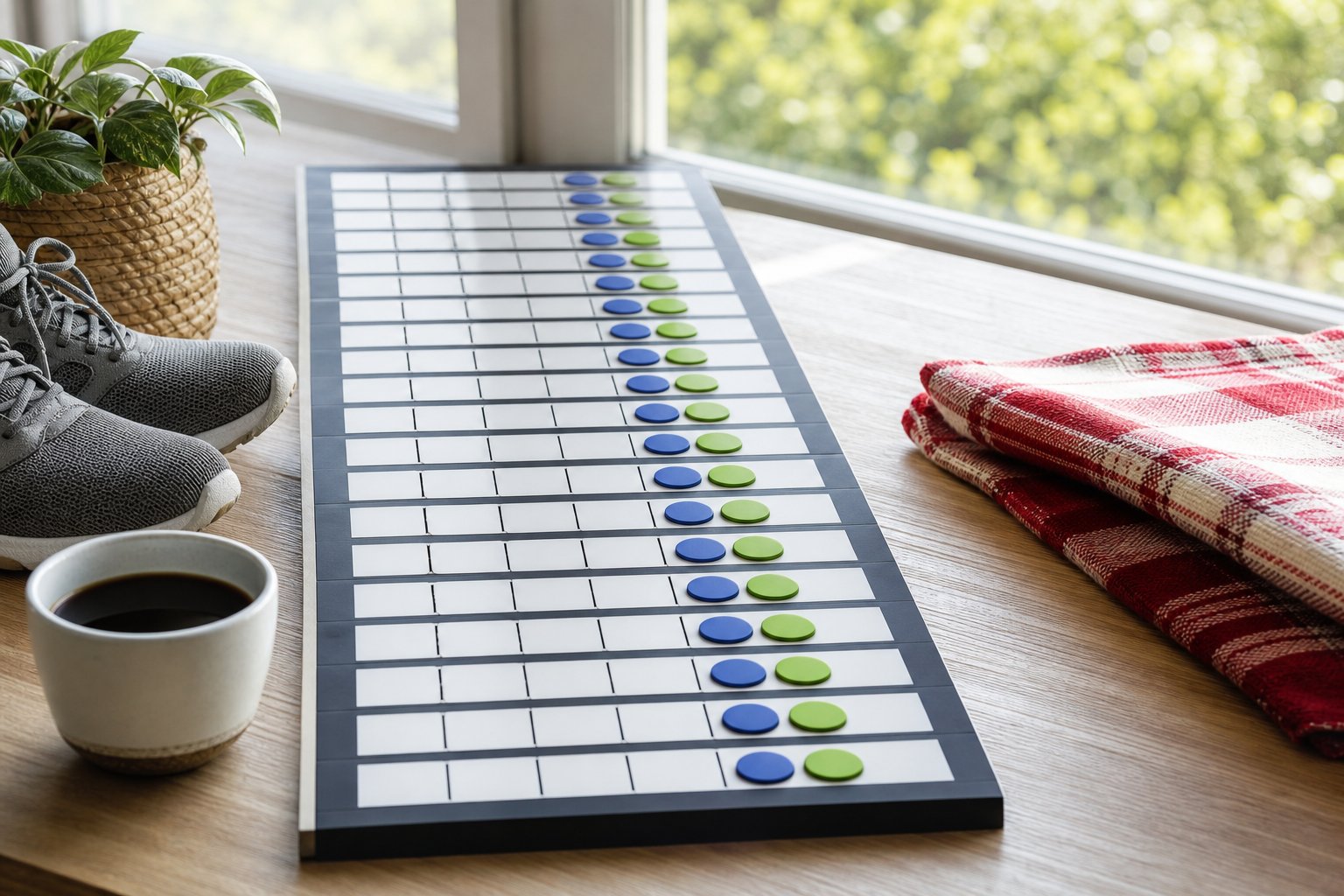
Most years have 52 full weeks plus one or two extra days, so weekend counts can vary depending on how Saturdays and Sundays fall. Planning tools use this as an estimate.
The basic count
A common year has 365 days, which equals 52 full weeks plus one day. A leap year has 52 full weeks plus two days, so every year contains at least 52 Saturdays and 52 Sundays.
Depending on the weekday on which the year starts, one or both weekend days can occur 53 times. That is why the exact count varies by year.
Weekends are not always two free days
A calendar weekend count does not know a person's work schedule, public holidays, caregiving responsibilities, travel time, or local definition of the workweek.
For planning, treat the number as available calendar opportunities and then subtract commitments that genuinely apply to your situation.
Estimating future weekends
A remaining-weekends tool can divide estimated remaining days by seven and also count future Saturdays and Sundays on the calendar. The two views are useful for different kinds of plans.
Any lifespan setting is only an assumption. The result should be framed as a prompt to plan meaningful time, not as a countdown to a guaranteed endpoint.
Turning the number into a plan
Start with a small horizon such as the next twelve weekends. Reserve a few for rest, relationships, errands, learning, and unplanned time instead of filling every date.
Review the plan seasonally. A useful weekend estimate creates perspective and flexibility; it should not turn leisure into another rigid performance target.
Count capacity, not just dates. A weekend containing travel, caregiving, or recovery may have little discretionary time, while a quiet half-day can be enough for a meaningful visit or project. Leave margins for weather and changing energy.
Why every year has at least 52 Saturdays and Sundays
A common year contains 365 days, or 52 complete seven-day weeks plus one extra day. A leap year contains 366 days, or 52 complete weeks plus two extra days. The complete weeks guarantee 52 occurrences of every weekday. The extra day or days determine which weekdays occur a 53rd time.
If a common year starts on Saturday, it has 53 Saturdays and 52 Sundays. If a leap year starts on Friday, both Friday and Saturday occur 53 times. To count weekend days exactly, inspect the weekday of January 1 and whether the year is leap. To count Saturday-Sunday pairs as weekends, define whether a pair split across two calendar years belongs to the starting or ending year.
Weekend pairs and weekend days are different totals
People often say '52 weekends' to mean 52 Saturday-Sunday pairs, while another calculation reports 104 or 105 weekend days. Neither label should be left ambiguous in a planning tool. Show Saturdays and Sundays separately when exact calendar counts matter, and use 'weekend pairs' or 'weekend opportunities' for the grouped estimate.
A partial weekend at the beginning or end of a date range adds another choice. From Sunday to the following Saturday, there are two weekend days but no complete Saturday-Sunday pair inside the interval. For long life-horizon estimates, dividing weeks can provide a readable approximation; for an actual annual plan, count the named dates on the calendar.
A weekend is not automatically free time
Calendar counts know nothing about shift work, caregiving, worship, travel, study, illness, household tasks, or countries where the standard workweek differs. Calling every Saturday and Sunday 'free' overstates personal capacity. Start with the calendar number, then account for responsibilities and recovery honestly.
A useful plan can classify weekends as committed, flexible, recovery, and unavailable rather than treating them as identical containers. Leave some unassigned. Weather, health, family needs, and unexpected work will change the year. Capacity is often better measured in half-days or energy than in a raw count of dates.
Planning the next twelve weekends
Long-range totals create perspective, but twelve weekends are easier to act on. Place fixed obligations first, reserve genuine rest, and choose only a few priorities. A family visit, learning session, home task, and outdoor day do not all need to happen every weekend. Alternate demanding and light plans where possible.
Review after four weeks. If plans repeatedly move, the issue may be capacity rather than motivation. Reduce the number of commitments or make them smaller. The point of seeing weekend time is to protect meaningful use and recovery, not to turn leisure into another performance dashboard.
Estimating remaining weekends responsibly
A remaining-weekends calculator needs an end horizon. A user-selected age or population statistic can supply a scenario, but neither identifies a known personal endpoint. The result should use words such as estimated, selected, and planning horizon, and it should avoid fear-based messages designed to make the number feel urgent.
Use the broad figure to ask a practical question: which recurring relationships or activities deserve space in the next season? Then return to a real calendar. For health, longevity, or retirement decisions, use qualified advice and richer evidence. A weekend estimate can support gratitude and prioritization, but it cannot predict how much time any individual will have.
An exact counting method
To count weekend days in a year, determine whether it has 365 or 366 days and find the weekday of January 1. Every weekday appears 52 times. In a common year, the starting weekday appears once more. In a leap year, the starting weekday and the following weekday each appear once more. Add the Saturday and Sunday occurrences to get the exact weekend-day total.
For a custom date range, iterate through the named dates or use a calendar function that identifies weekday after normalizing date-only values. Decide whether to include both endpoints. Count Saturdays and Sundays separately, then define complete weekend pairs if that number is needed. This works better than dividing total days by seven when the range begins or ends in the middle of a weekend.
For planning, add local public holidays only when they create usable time for the person. A holiday on Tuesday does not increase the Saturday-Sunday count, though it may create a longer break. Conversely, weekend work can reduce discretionary time even though the calendar count is unchanged. Keep calendar opportunity and personal availability as separate columns.
A yearly total becomes useful when connected to a modest allocation. Reserve recovery first, add fixed responsibilities, then choose a limited number of trips, visits, or projects. Do not assign all weekends. A plan with no slack fails as soon as weather, illness, repair, or care work appears.
At year end, compare the plan with lived experience rather than only completed events. Ask whether there was enough rest, whether important relationships received attention, and which commitments should not be repeated. Counting creates perspective; reflection creates the improvement. Neither requires a fear-based estimate of a final personal date.
When using a remaining-weekends horizon, repeat the words selected and estimated near the result. A population average or chosen age is not a promise. The safest action is to turn the broad number into one near-term calendar decision and leave the distant future open.
Additional practical checks
Different cultures and jobs place rest days elsewhere in the week. For a Sunday-Thursday work pattern, Friday and Saturday may be the relevant pair. Until a tool lets users select recurring days, label Saturday-Sunday results as calendar weekend counts rather than universal leisure. Teams should publish working and closure calendars instead of asking people to infer availability from weekday names. Personal plans should follow the schedule actually lived.
Parents, carers, students, and shift workers may have fragmented time rather than complete weekend pairs. Count the usable blocks that match the goal, such as one quiet morning or two shared meals. A smaller honest unit supports better planning than a larger calendar number that was never truly available.
Sources and further reading
These references support the calendar rules, cultural context, or public-data definitions discussed in this guide.
- U.S. Naval Observatory: Introduction to CalendarsGregorian calendar and weekday-cycle reference.
- ISO: Date and Time RepresentationStandard date representation used for unambiguous result dates.