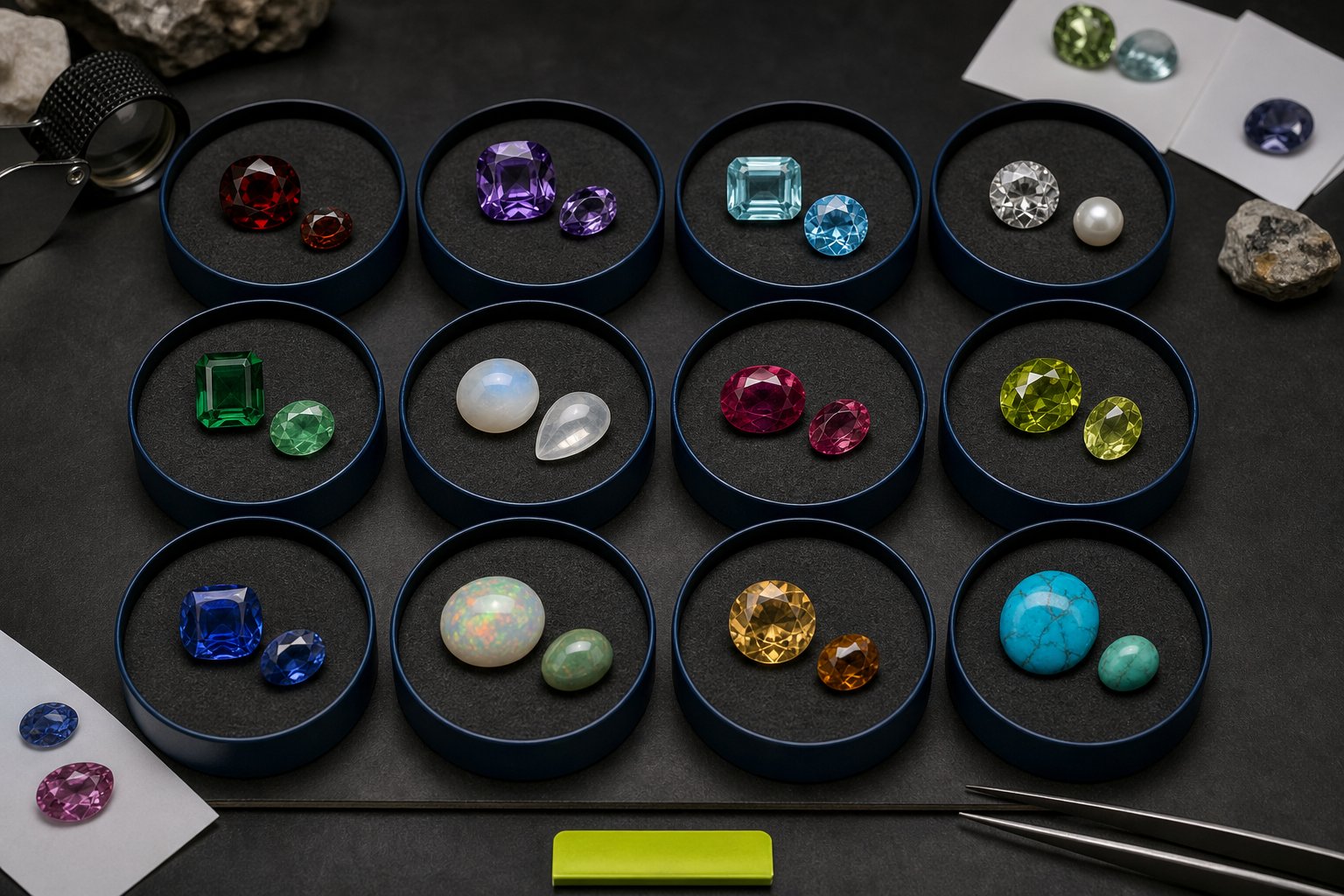
Birthstone lists are cultural traditions. Several months have alternate stones, so a useful calculator should show accepted options rather than pretending there is only one universal list.
Why lists vary
Birthstone traditions developed through different historical, commercial, and regional lists. Modern jewelry associations and older traditional lists do not always choose the same stone for a month.
A useful lookup can show modern, traditional, and accepted alternate stones instead of presenting one list as the only possible answer.
Color is not always fixed
Many gemstones occur in more than one color, and treatments can affect appearance. A month commonly associated with a color may still have natural or accepted variations.
When buying a gift, focus on the named stone, seller disclosure, durability, and the recipient's taste rather than assuming every example must match a single color swatch.
Meanings are cultural
Ideas such as protection, calm, courage, or loyalty are symbolic traditions. They are not medically or scientifically guaranteed properties of a gemstone.
These meanings can still make a gift note more thoughtful when they are framed as stories or associations rather than factual promises.
Choosing a practical gift
Consider how the item will be worn. Rings and everyday bracelets need durable stones and secure settings, while pendants or display pieces can accommodate more delicate materials.
Ask a reputable seller about synthetic stones, treatments, care, and return terms. The calculator offers ideas, but an independent appraisal is appropriate for a high-value purchase.
Include care instructions with the gift. Heat, chemicals, sunlight, ultrasonic cleaning, and everyday impact affect stones differently, so the safest cleaning method depends on the material and any treatment it has received.
Why birthstone lists are not universal
Birthstones are cultural and jewelry traditions rather than a natural classification discovered inside each month. Historical lists, religious interpretations, regional customs, and modern trade organizations have all shaped which stones are associated with which dates. As a result, a month can have a modern stone, a traditional stone, and accepted alternatives. A useful calculator shows those distinctions instead of presenting one commercial list as the only correct answer.
The modern United States list was standardized through jewelry-industry efforts in the twentieth century and has been revised as availability and consumer preferences changed. Other countries and families may use different lists. When someone asks for 'the' birthstone, clarify whether they want a familiar modern choice, a traditional association, or a stone meaningful in their own culture. The answer can be plural without being inaccurate.
Color names are only a starting point
A gemstone name does not always imply one color. Sapphire, tourmaline, garnet, spinel, and other gem materials occur in multiple hues, while lighting, cut, inclusions, and treatment affect appearance. Even stones strongly associated with one color can vary. A website swatch is therefore a visual hint, not a specification for buying or identifying a gem.
For a gift, begin with the recipient's taste and how the item will be worn. Someone who dislikes red may prefer a January alternative even if garnet is the best-known choice. Metal color, skin sensitivity, setting style, and wardrobe can matter more than a traditional color story. The month association should help narrow the search, not force a purchase the recipient will not enjoy.
Natural, synthetic, imitation, and treated stones
A natural gemstone forms without human manufacture, while a synthetic stone has substantially the same material properties but is grown in a laboratory. An imitation only resembles another gem. Treatments such as heating, filling, irradiation, dyeing, or coating can improve appearance and may affect care or value. None of these categories is automatically dishonest when the seller discloses it accurately.
Ask for written disclosure before buying, especially online. Product photography can be edited, and trade names can sound more specific than the material actually is. For a high-value item, request a report from a respected independent gem laboratory or consult a qualified appraiser. A birthstone calculator identifies traditions; it cannot authenticate the object in a listing or photograph.
Durability and care belong in the decision
Rings and everyday bracelets receive more impact and abrasion than pendants or occasional earrings. Hardness is useful but not the whole story; toughness, cleavage, porosity, treatments, and setting protection also affect wear. Pearls and opals require different care from corundum stones such as ruby and sapphire. A beautiful month association is not enough if the chosen material cannot tolerate the intended routine.
Ask the seller for material-specific cleaning advice. Ultrasonic and steam cleaners are unsafe for some stones and treatments. Household chemicals, sudden temperature changes, prolonged sunlight, and hard knocks can cause damage. Store pieces separately so harder gems do not scratch softer ones. Include care instructions with a gift, and have settings inspected periodically when the item is worn often.
How to use symbolic meanings honestly
Birthstone meanings such as loyalty, protection, courage, calm, or renewal are stories passed through cultures and marketing traditions. They can make a card or gift note thoughtful, but they are not medical treatments, guarantees, or measurable powers. Phrase them as associations: 'Sapphire has long been linked with loyalty' is more responsible than promising that a stone will create loyalty or improve health.
The most personal meaning may come from the recipient rather than the published list. A family heirloom, favorite color, place of origin, or shared memory can matter more than a month assignment. Use the calculator to discover options, then make the final choice through taste, budget, seller transparency, and practical care. That process respects the tradition without turning a symbolic guide into a scientific claim or purchasing instruction.
A practical buying conversation
Tell the seller the month association you are considering, the type of jewelry, how often it will be worn, and the budget. Ask for the exact gem material, whether it is natural or laboratory-grown, any treatments, metal composition, dimensions, return period, and care instructions in writing. A clear answer is more valuable than a dramatic story about rarity or healing.
Compare the complete item rather than price per stone name alone. Cut quality, craftsmanship, setting security, disclosure, brand costs, and laboratory reports can all affect price. Be cautious with countdown timers, enormous unverifiable discounts, copied certificates, and listings that use a valued gem name only as a color word. Search the seller's return and complaint process before purchasing.
For a child or someone with an active routine, consider safety, allergies, snagging, and durability. A pendant, charm, or framed stone may be more practical than an exposed ring. For an heirloom purchase, choose a design that can be maintained and document treatments for future repair. Sentimental value grows when the item can actually be worn and cared for.
In the gift note, explain the association without making promises: 'Pearl is one of June's traditional birthstones, and I chose it because you love simple jewelry.' That sentence connects tradition with the person. It is more genuine than claiming the stone will change health, luck, or character. The calculator opens the choice; transparent shopping and personal knowledge finish it.
If the purchase is expensive, obtain independent professional advice. Online photos and a month lookup cannot establish identity, quality, origin, or value. Keep receipts, reports, treatment disclosures, and insurance information together. A birthstone is meaningful because of the story people give it, but responsible buying still depends on ordinary evidence.
Additional practical checks
When inheriting a piece, do not assume the stone from the owner's birth month. Have it inspected before cleaning, resizing, or repair. Old settings may be fragile, and undocumented treatments can react badly to heat or chemicals. Preserve family stories as stories while letting a professional establish the material facts. Photograph markings and keep repair records with the item.
For a modest gift, authenticity still matters, but meaning does not require rarity. A well-disclosed laboratory-grown stone or durable alternative can be a thoughtful choice when it suits the recipient and budget.
Sources and further reading
These references support the calendar rules, cultural context, or public-data definitions discussed in this guide.
- Gemological Institute of America: Birthstones by MonthGemological reference for recognized monthly stones, materials, colors, history, and care.
- Jewelers of America: BirthstonesJewelry-industry overview of birthstone lists and buying context.